Advanced Therapies · Bonita Springs, FL
Radial Shockwave Therapy in Bonita Springs
Targeted care for persistent tendon and soft-tissue pain.
Pain can make everyday activities—and the workouts, hobbies, and sports you enjoy—more difficult. At Gulfside Chiropractic, radial shockwave therapy offers a noninvasive treatment option for certain persistent musculoskeletal conditions. We start with an evaluation to determine whether it fits your diagnosis and recovery goals.
Radial Shockwave Therapy
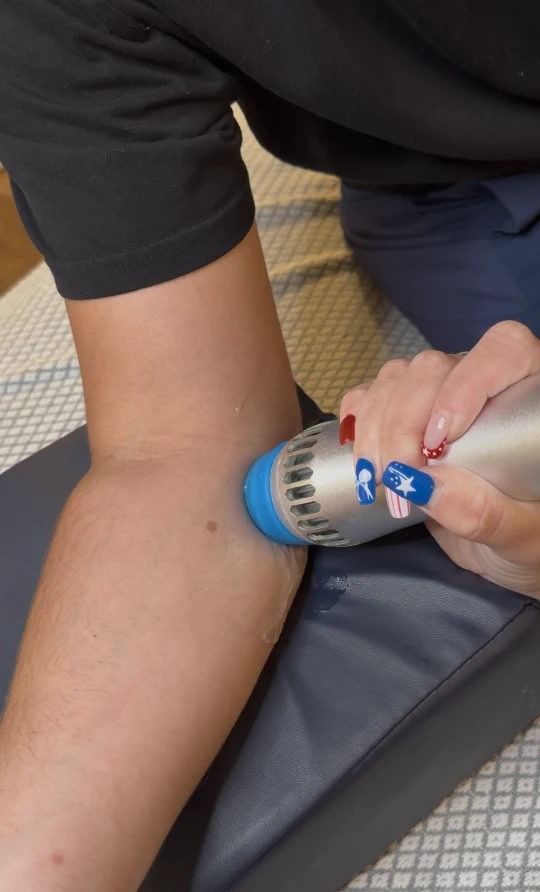
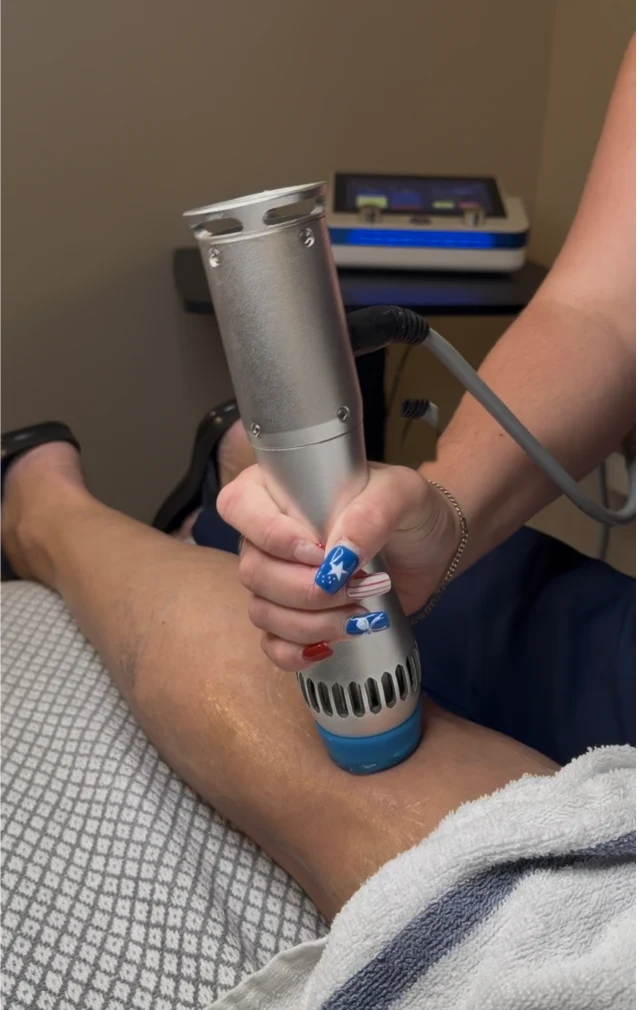
Shockwave therapy is a noninvasive treatment that delivers mechanical energy into an area of pain or injury. At Gulfside Chiropractic, we use the Medray Softshock radial device, which delivers pressure waves through a handheld applicator to the tissues being treated. Treatment may help reduce pain, improve function, and support recovery when combined with appropriate rehabilitation.
How does it support healing?
Research into shockwave therapy has identified biological responses involved in tissue repair, including stimulation of collagen production and angiogenesis—the formation of new blood vessels.
Collagen provides strength and structure to tendons and other connective tissues. Producing and remodeling collagen are important parts of repairing injured tissue and rebuilding its ability to tolerate activity. New blood vessels can help deliver the oxygen and nutrients needed for that repair process.
Laboratory and animal studies suggest that shockwave therapy can stimulate these responses, helping explain its potential to support tissue healing. Clinical studies have also reported improved tendon healing and, for some injuries, a faster return to activity when radial treatment is added to rehabilitation.
At Gulfside, we use radial shockwave as part of an individualized plan to address persistent pain and support recovery. Progress depends on the condition, the extent of the injury, and the rehabilitation needed to restore strength and function.
What Conditions May Benefit?
Radial shockwave offers a targeted treatment option for persistent tendon, muscle, and soft-tissue pain. It may help reduce pain and sensitivity, improve comfort with movement, and support your progress through rehabilitation.
Conditions we may recommend it for include:
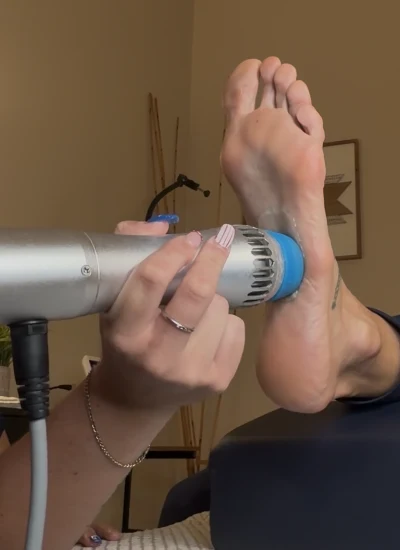
- Plantar fasciitis: Persistent heel and arch pain.
- Achilles tendinopathy: Pain and stiffness involving the Achilles tendon.
- Tennis elbow: Tendon pain on the outside of the elbow.
- Patellar tendinopathy: Pain in the tendon below the kneecap, often called jumper’s knee.
- Greater trochanteric pain syndrome: Pain along the outside of the hip involving the gluteal tendons.
- Myofascial pain and trigger points: Tender, painful areas within muscles.
- Neck and back pain: Symptoms involving the muscles and other soft tissues surrounding the spine.
These are recognized treatment applications, with research support varying by condition. Our team evaluates the source of your symptoms to determine where shockwave may provide the most benefit.
Radial Shockwave for Neck and Back Pain
The spine is supported by a network of muscles, tendons, ligaments, and fascia. These tissues can contribute to pain, tenderness, and restricted movement—and may be appropriate targets for treatment.
Radial shockwave may help through pain modulation, meaning it can influence pain signaling and reduce sensitivity in the treated area. For selected patients, this can make movement more comfortable and help them participate more effectively in exercise and rehabilitation. Research has reported pain relief in certain chronic low-back and myofascial pain presentations.
At Gulfside Chiropractic, we have observed improvement in patients receiving radial shockwave as part of their care for neck and back complaints. These observations reflect our clinical experience; individual responses vary.
Our approach focuses on identifying and treating the soft-tissue contributors to your symptoms. Depending on your needs, we may combine shockwave with chiropractic care, manual therapy, and targeted exercise to help you move more comfortably and return to the activities you enjoy.
What Should I Expect?
A handheld applicator delivers repeated pulses over the selected treatment area. You may feel tapping, pressure, or discomfort, and the intensity can be adjusted to your tolerance.
Temporary soreness, redness, swelling, or bruising can occur. Treatment is typically provided as a series, with the schedule tailored to your condition and response. Improvement may develop gradually, and results are not guaranteed. We will also discuss appropriate activity and rehabilitation during your care.
Who Should Consult Their Physician Before Treatment?
Please speak with your treating physician and tell our team before beginning shockwave therapy if you:
- Are pregnant or may be pregnant.
- Take blood-thinning medication or have a bleeding or clotting disorder.
- Have a pacemaker, defibrillator, or another implanted electronic device.
- Have cancer, particularly in or near the proposed treatment area.
- Have an active infection or an open wound in the area.
- Recently received a corticosteroid injection in the area or take systemic corticosteroids.
These circumstances require individual review and may mean treatment should be modified, postponed, or avoided. Shockwave must not be applied over a known malignant tumor, a fetus, or an implanted pacemaker or defibrillator. Do not stop prescribed medication without guidance from your prescribing clinician.
Research & Clinical Resources
Interested in learning more? Explore these published resources:
- Radial shockwave for chronic plantar fasciitis — A multicenter, randomized, placebo-controlled trial.
- Radial shockwave for chronic low-back pain — A randomized clinical trial examining pain and function.
- Radial shockwave and immediate low-back pain relief — A 2024 placebo-controlled trial examining immediate effects.
- International recommendations for shockwave therapy — A 2025 expert consensus study addressing treatment practices and safety.
- Biological effects of shockwave therapy in tendons — A systematic review covering laboratory and animal research on collagen, new blood vessel formation, and tissue remodeling.
- Best practices for shockwave therapy in musculoskeletal medicine — A review of clinical application and proposed mechanisms of action.
- Shockwave and collagen synthesis in human tendon cells — A 2011 laboratory study of tendon cells grown in culture.
- Shockwave and new blood vessel growth at the tendon–bone junction — A 2003 study in rabbits.
- Radial shockwave plus rehabilitation for acute hamstring injury — A 2025 randomized, controlled trial in semi-professional athletes.
These resources describe particular patient groups and treatment protocols; they do not establish that every shockwave device or application produces the same results.
Find Out Whether Shockwave Is Right for You
Our Gulfside Chiropractic team will evaluate your symptoms, review your medical history, and discuss whether radial shockwave belongs in your treatment plan.
Schedule an evaluation in Bonita Springs. Call (239) 908-9762
Call for pricing.